
My Emotional Weather Check-In: Helping Young Children Understand and Express Their Feelings

TThe Emotuonal Weather Check-In
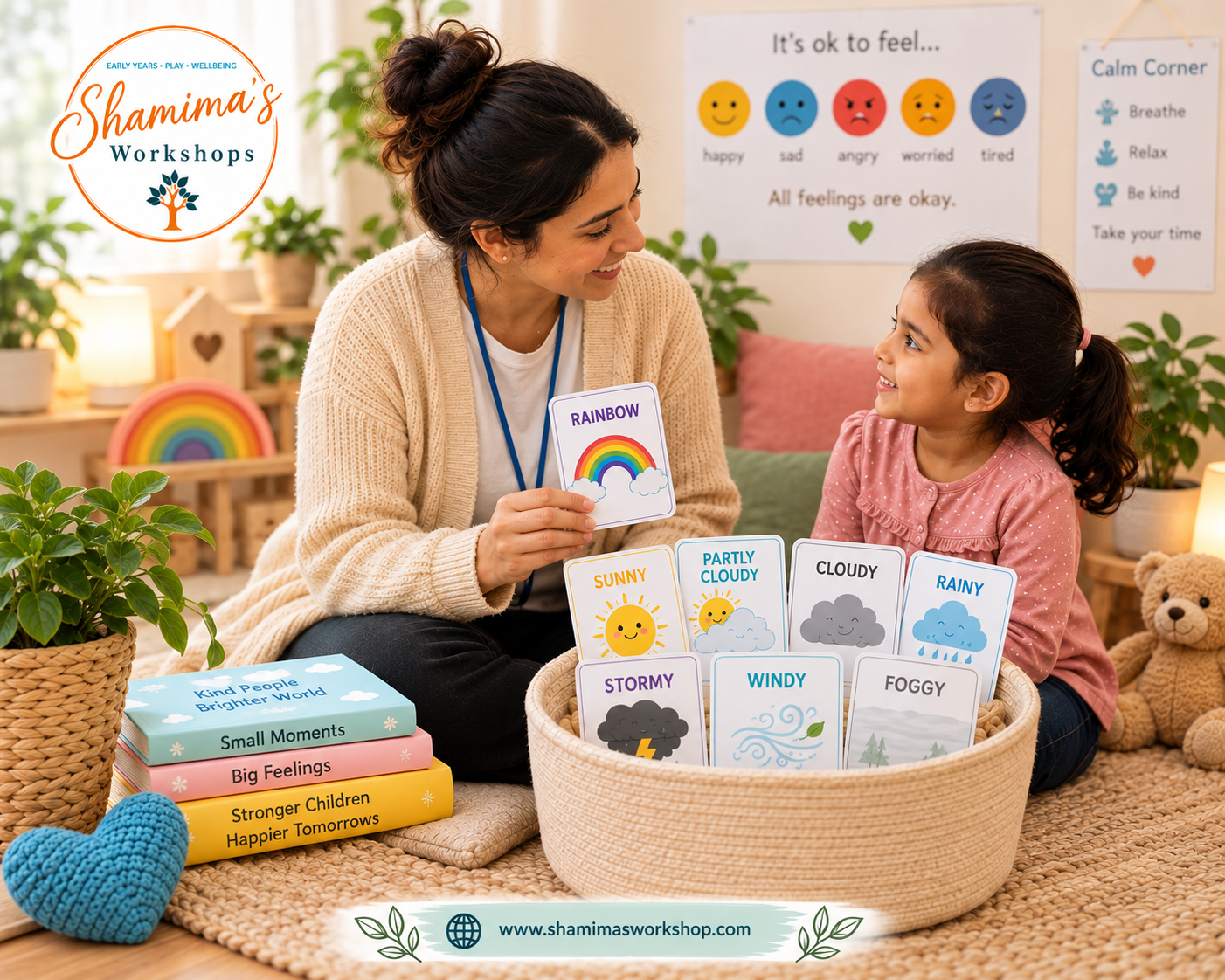
Every child has emotional weather. Sometimes it's sunny, sometimes it's cloudy, and sometimes a storm feels too big to manage. But how can we help young children express their feelings when they don't yet have the words to explain what is happening inside them? Supporting children's emotional wellbeing begins with helping them feel safe, understood and listened to. At Shamima's Workshops, we believe that emotional development is not about making children happy all the time. It is about helping them recognise their feelings, communicate their needs and experience supportive relationships.
That's why we have developed My Emotional Weather Check-In, a practical, child-friendly resource pack designed to support emotional literacy in the early years.
What Is My Emotional Weather?Check-In?
My Emotional Weather Check-In uses familiar weather illustrations to help children explore and communicate their emotions. Just as the weather changes throughout the day, children's feelings can change too.
A child might feel:
- ☀️ Sunny: Happy, comfortable and ready to play.
- 🌈 Rainbow: Excited or experiencing several feelings at once.
- 🌤️ Partly Cloudy: Unsure or experiencing mixed feelings.
- ☁️ Cloudy: Quiet, sad or needing some space.
- 🌧️ Rainy: Upset or needing comfort.
- ⛈️ Stormy: Overwhelmed by big feelings.
- 💨 Windy: Restless or finding it difficult to settle.
- 🌫️ Foggy: Confused, tired or unsure how they feel.
These illustrations provide a starting point for emotional conversations without requiring children to explain everything verbally. The most important message is that all emotional weather is welcome.
The goal is not to change every child's emotional weather to Sunny. It is to notice, listen and respond to what the child needs.
Why Is Emotional Literacy Important in Early Childhood?
Young children are still developing their ability to recognise, understand and communicate emotions.
When children struggle to express their feelings, adults may notice crying, frustration, withdrawal, restlessness or behaviour that appears challenging.
Rather than focusing only on the behaviour, we can begin by asking:
What might this child be experiencing, and what support do they need from me?
Visual emotional resources can provide opportunities to:
- Develop emotional awareness and vocabulary.
- Encourage communication and self-expression.
- Support positive adult-child relationships.
- Introduce simple co-regulation strategies.
- Help children recognise that emotions can change.
- Create emotionally supportive learning environments.
What's Included in the Resource Pack?
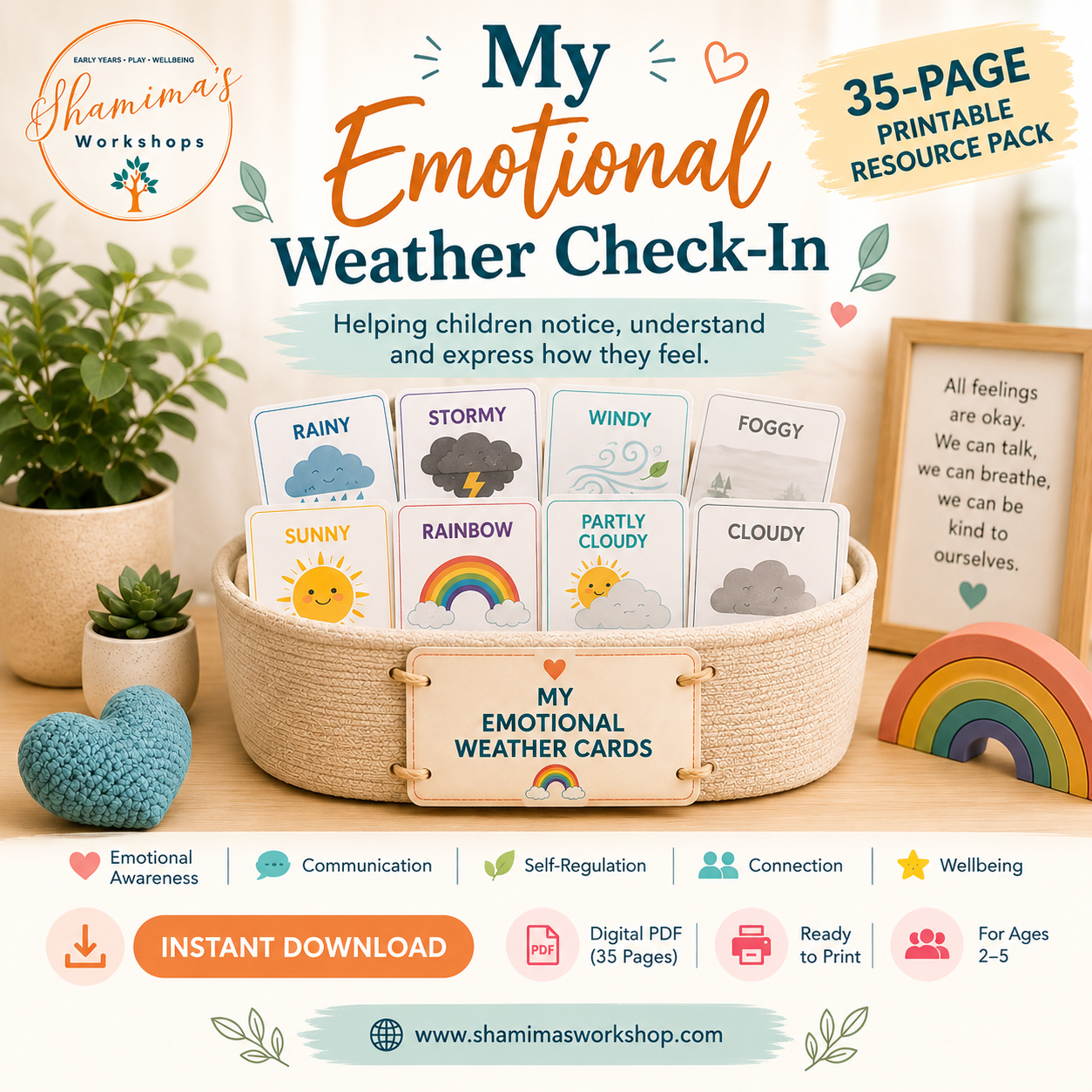
My Emotional Weather Check-In is a comprehensive 35-page digital PDF resource designed to help adults introduce and use emotional weather meaningfully.
Inside the pack, you will find:
- Colourful emotional weather illustrations and printable cards.
- Detailed guidance on understanding the eight emotional weather concepts.
- Step-by-step instructions for introducing emotional check-ins.
- Practitioner guidance and suggested questions for each emotion.
- Practical approaches to co-regulation and emotional support.
- Ideas for using the resource during arrival, circle time, transitions and calm-space activities.
- Guidance for adapting the activity to children's individual communication and developmental needs.
- Practitioner observation and reflection prompts.
- Emotional Weather recording templates.
- Ideas for connecting emotional learning between home and the early years setting.
The resource also makes connections with the EYFS areas of Personal, Social and Emotional Development and Communication and Language.
Who Is This Resource For?
This pack is suitable for:
- Nursery and preschool practitioners.
- Early years educators and teaching assistants.
- Early years leaders and SENCOs.
- Childcare professionals.
- Parents and caregivers.
- Early childhood education students.
The activities are primarily designed for children approximately 2–5 years old, with adaptations based on individual developmental and communication needs.
How Can You Use the Emotional Weather Cards?
You can introduce the cards during daily routines, one-to-one conversations, key-person time or quiet moments.
For example, when a child selects the Stormy card, rather than immediately encouraging them to calm down, a practitioner might say:
"I can see your weather feels stormy today. I'm here with you. What might help?"
Sometimes the child may want to talk. Sometimes they may need quiet time, movement, reassurance or simply a trusted adult nearby.
The resource encourages practitioners to respond with sensitivity rather than pressure.
Because supporting emotional wellbeing begins with connection, not correction.
Purchase Your Emotional Weather Resource Pack
Welcome

Hi, i am Shamima Fowzee, an early years educator, trainer and consultant. I Share ideas, inspiration, & resources for play-based, inquiry-led learning. Find out more about me here.
SHOP NOW
RECENT POST



How can I thank you? Spread the word!
For everyone who is passionate about the importance of Early Years.