Reading books with Children
The Power of Reading Books with Children
Why Reading with Children Matters & Practical Tips for Parents
By Shamima Fowzee | Early Years Trainer & Creative Art Practitioner
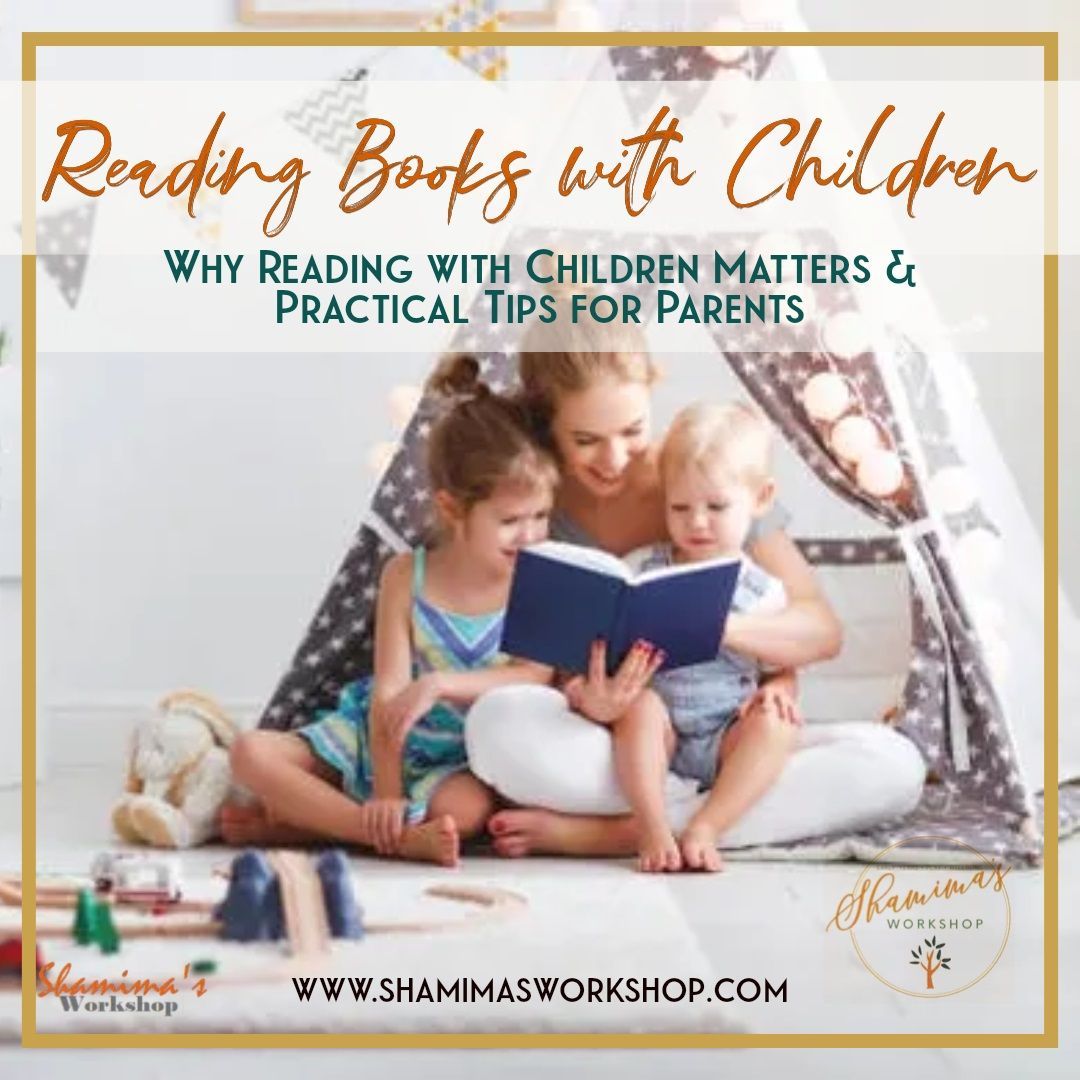
Why reading with children is so important?
Books and stories promote learning and development in children by providing them with the building blocks of language. It gives them the tools for forming lifelong social and emotional skills. We all know reading is an essential skill that serves children well in school and in life in general. Children can make friends with the books they read and the characters they meet. It's also crucial for children to understand that books are a valuable source of information and that solid reading abilities are essential for future success. However, listening to books read aloud also has huge benefits for children of all ages. Books and stories can promote the learning and development of children. Here I will highlight some important aspects of how books and stories link to the learning and development of children in the early years:
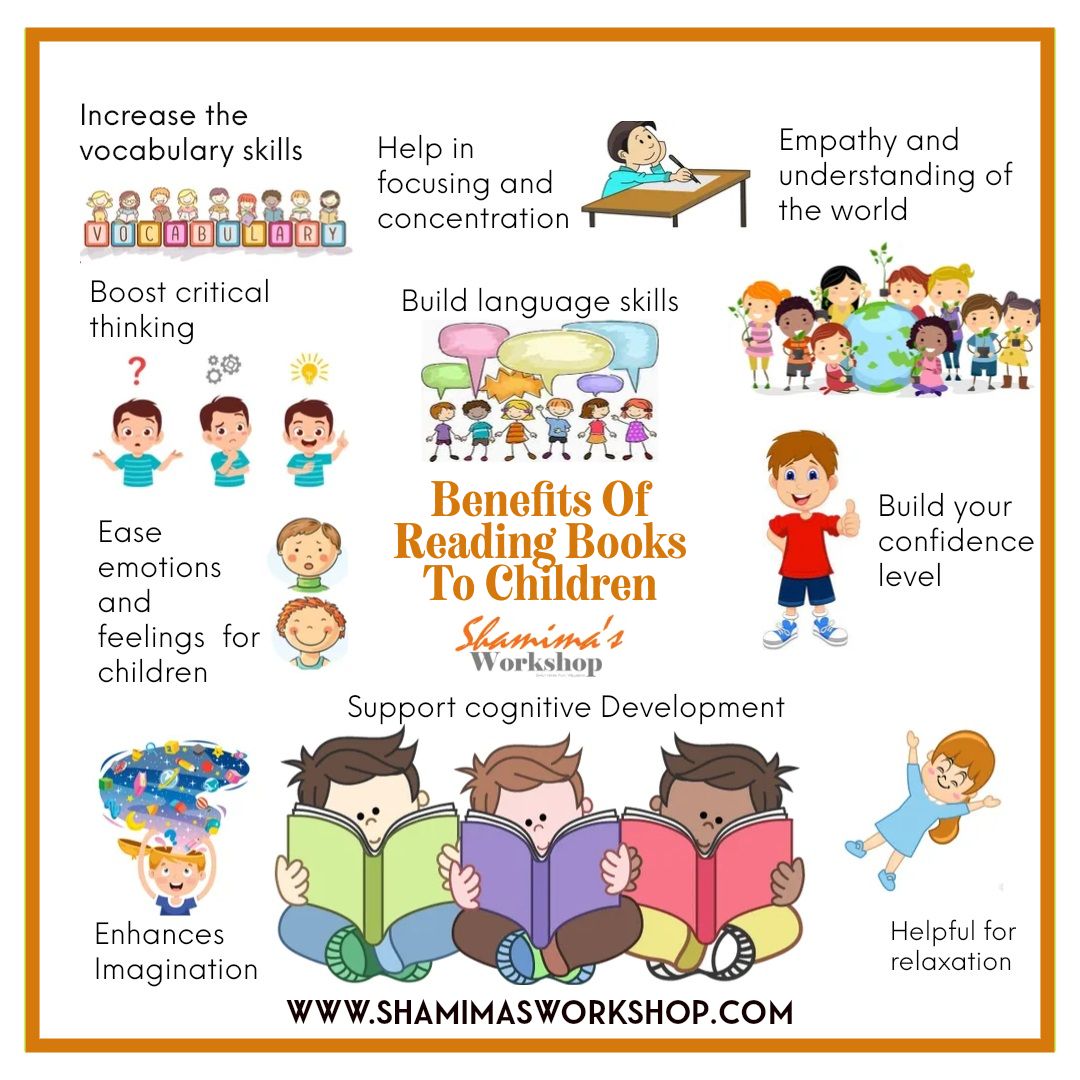
Increase the vocabulary skills:
While reading to your child, you'll notice that there are many new words in stories and books that your child hasn't heard before, so take your time explaining new words to your child and making sure he or she understands what you're reading to him or her. These new vocabulary words will let the child develop a better level of words to use in his way of life while reprimanding others. So reading stories and books will develop communication and language skills in your child.
Ease Emotions and Feelings for Children:
Some children may be anxious about their recent experiences, fearful of certain things, or so emotionally sensitive that they would do anything for their parents. So it's good to have them read books about this subject. Books and stories will help children search out ways to cope with their problems and fears. Books give children ideas on how to relax, calm down, and accept new experiences.
Help in focusing and concentration:
When you read to your child, you will see him playing quietly beside you or not focusing; after all, while you read aloud, he is going to be gaining concentration skills. Once you read with or to your child, he is trying to focus, hear, and understand the story or book, so this can help enhance their listening skills and focus skills further. To get your child more involved in reading and ensure that he's understanding and focusing, ask him questions about the story or ask him if he has any questions or something is unclear.
Support cognitive development:
Reading or listening to stories helps children's brains develop their ability to focus, concentrate, and solve problems. Children who have been accustomed to hearing or reading stories since early years will have better academic results at school than people who don't, because books will help children extend their knowledge about many topics and learn new vocabulary words.
Empathy and understanding of the world:
Books offer a limitless supply of social interaction examples from which to learn empathy in addition to other skills. Children are shown both effective and ineffective ways to handle conflict in a variety of situations in scenes that are jam-packed with character dialogue.
Build language skills:
Reading or listening to books allows children to hear a large number of words and more complex language sequences than they might otherwise hear in their everyday lives. Books, as we know, are a great way to immerse children in the rhymes and rhythms of speech, which are vital for language development. When children hear books from an early age, they develop their language and communication skills, making it easier for them to form conversations with others and speak correctly.
Enhances imagination:
When we read, we create a visual picture of what we're reading. We imagine how the characters seem, what is going on in each chapter, and how we are connected to these characters and events. These characters are linked to our emotions, and we identify with them. Reading story books sparks a child's imagination and stimulates curiosity by taking them to places and situations that they won’t encounter in their daily lives. The beauty of a storybook is that it can be both extremely realistic and fantastical.
Helpful for relaxation:
Reading books before bedtime, for example, can be helpful for relaxing. They allow children to forget about the stresses of the day and lose themselves in fantasy for a while. The soothing familiarity of a well-loved story, the rhyming and repetition of a picture book, as well as the sense of security that time spent reading together may engender all contribute to the child's relaxation.
When it comes to reading to your children, the advantages go far beyond the building of a deep bond with them, though that is undoubtedly one of them. Reading aloud to children is the single most important activity for developing these fundamental concepts and skills for reading success that your child will carry with them for the rest of their lives.
Boost critical thinking:
With reading books and developing critical thinking skills, children start predicting what will happen at the end or next part of the story, thus challenging their brains to think of other possibilities.
Build your confidence level:
A child who can read books feels more confident, which will benefit him in his future academic skill development. He can participate fully in all activities. Another aspect of developing confidence is developing self-esteem, or feeling like you belong in the world.
How to Make Reading Time Magical (Practical Tips)
Here are simple strategies you can use immediately:
1. Create a Reading Ritual
Choose a consistent time (bedtime works beautifully) and use a quiet, cozy corner. Allow your child to choose the book. Consistency builds anticipation and love for reading.
2. Use Expression & Funny Voices
Children love when adults change tone for different characters, add dramatic pauses and whisper or exaggerate emotions. The more expressive you are, the more engaged they become.
3. Talk About the Pictures
Before reading the words, ask questions, such as:
- “What do you think is happening here?”
- “How is the character feeling?”
- “What might happen next?”
This builds critical thinking and communication skills.
4. Encourage Participation
Let children turn pages, repeat familiar phrases, predict the ending and retell parts of the story. Reading should be interactive, not passive.
5. Repetition Is Powerful
Children love reading the same book again and again , and that repetition strengthens learning. Familiar stories build confidence and comprehension.
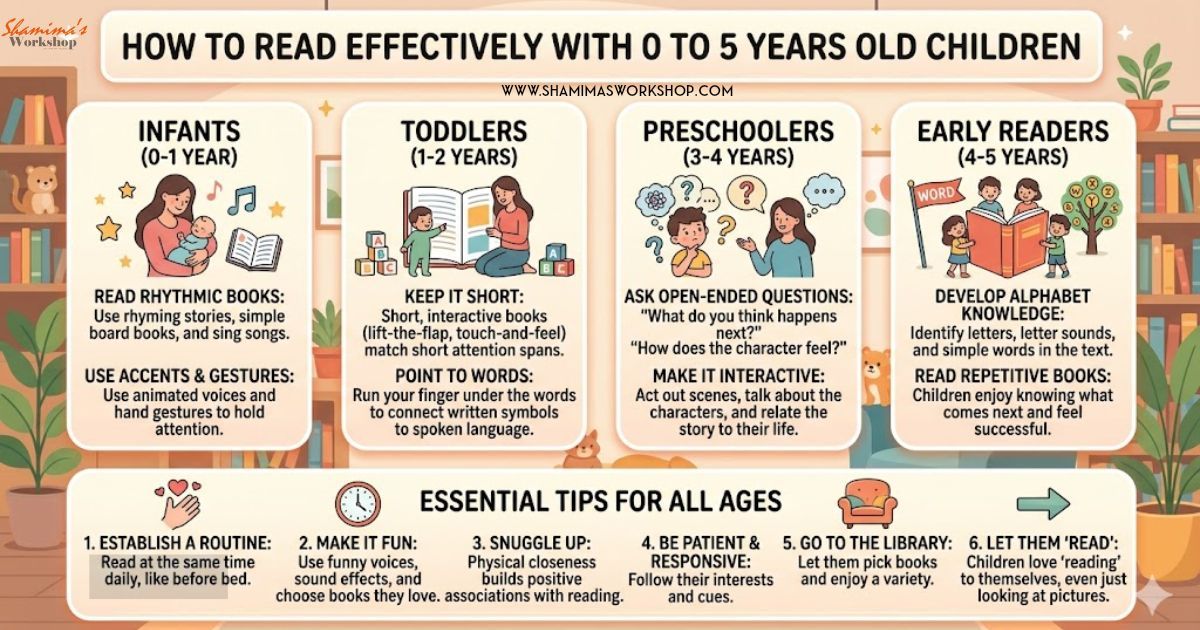
Criteria you could refer to when choosing books for young children
Children’s reading experiences should reflect their stage of development. Understanding how reading supports children at different ages allows parents and practitioners to provide appropriate, meaningful, and engaging experiences.
Reading is not just about decoding words — it supports communication, cognition, emotional development, and social understanding from birth onwards.
0–12 Months: Building Foundations Through Voice & Connection:
At this stage, babies are not “reading” in the traditional sense, they are absorbing language, rhythm, tone, and emotional cues. Select board books with bright images, simple rhymes and repetition and sensory or touch-and-feel books for this age group of children. At this stage, it’s about hearing language and bonding.
While reading a book with this age group of children, use a warm and expressive tone, maintain eye contact, smile, and exaggerate facial expressions. Try to repeat their favourite stories frequently.
1–2 Years: Language Explosion & Curiosity:
Between 12 and 24 months, children experience rapid vocabulary growth. Reading at this stage significantly boosts expressive and receptive language. Toddlers begin pointing to pictures, labeling objects, and anticipating familiar phrases. Select books with real-life objects (animals, food, and transport), books about routines (bedtime, potty training, feelings), lift-the-flap books, and simple repetitive stories for this age group of children.
While reading a book with this age group of children, use pauses and allow the child to label pictures; ask simple questions such as “Where is the dog?”; encourage page turning; and repeat favourite lines and allow them to join in. Repetition builds confidence. If they want the same book 20 times, that is learning in action.
2–3 Years: Imagination & Emotional Understanding:
At this stage, children begin engaging more deeply with storylines. Their imagination grows, and they begin to understand simple plots and character emotions. Read simple storybooks with clear beginnings and endings, books about feelings (happy, sad, angry, scared), books that reflect everyday nursery experiences and books with repetitive refrains.
While reading a book with this age group of children, ask open-ended questions, such as “How do you think she feels?” and “What might happen next?”. Encourage children to retell parts of the story and relate the story to their lives, such as, “Remember when you went to the park like this?” This stage is powerful for developing emotional literacy and empathy.
3–4 Years: Early Literacy Awareness & Confidence
Children now begin developing early literacy skills that link directly to EYFS outcomes. Children may pretend to read by recalling memorised phrases; this is a strong early literacy indicator. For this age group select slightly longer stories, rhyming books (supporting phonological awareness), alphabet and sound books and stories with simple problem-solving.
While reading a book with this age group, point to words as you read, emphasise rhyming patterns, identify beginning sounds (“B is for bear!”), and encourage children to predict endings. At this stage, reading builds school readiness without formal instruction.
4–5+ Years: School Readiness & Deeper Comprehension
As children approach reception age, reading becomes more structured, but the joy of storytelling must remain central. Children begin recognising familiar words and attempting to read simple sentences. For this age group, select stories with richer plots, non-fiction books (space, dinosaurs, animals), traditional tales, and books linked to phonics learning.
While reading a book with this age group of children, discuss characters’ choices; ask reasoning questions, such as “Why do you think he did that?”; encourage children to read familiar words; and allow them to “read” to you. This builds independence while maintaining emotional connection.
While choosing a book, show books to the child, give different options, and try to help him choose a better book. Flip through some pages and explain what the book is all about. Many libraries have seating arrangements near the children's book section so that parents can sit with their children and look inside the book before choosing one. Give them freedom to make their own choices and decisions.
Final thoughts
Reading with children is not just about preparing them for school. It is about nurturing confident communicators, imaginative thinkers, and emotionally secure individuals.
At Shamima’s Workshop, we encourage parents and practitioners to view reading as a daily investment in a child’s future, one story at a time.
If you would like more practical Early Years strategies, explore our CPD workshops and resources designed to support educators and families alike.
GRAB YOUR DOWNLOAD!
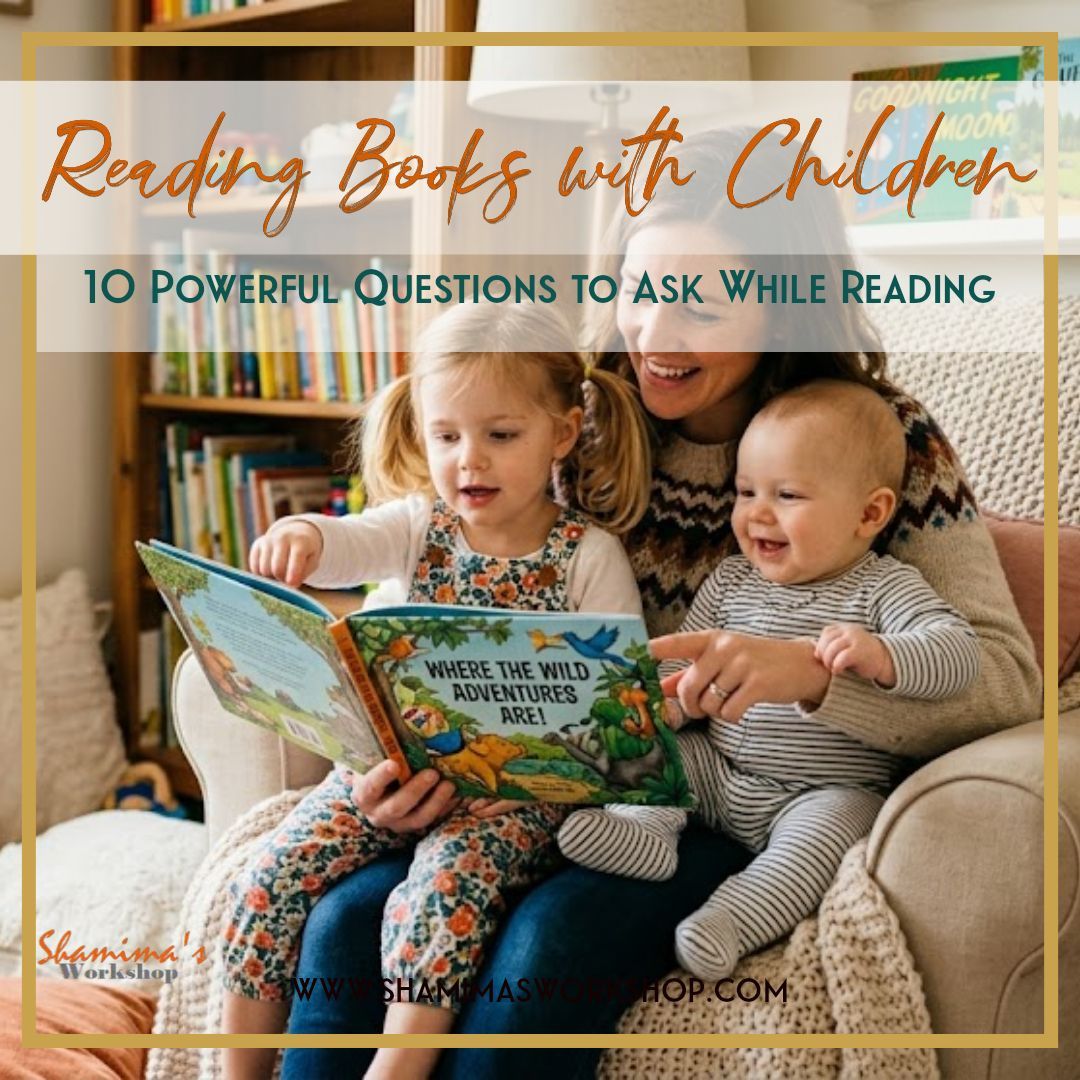
Grab your download!
10 powerful questons to ask while reading
Welcome

Hi, i am Shamima Fowzee, an early years educator, trainer and consultant. I Share ideas, inspiration, & resources for play-based, inquiry-led learning. Find out more about me here.
SHOP NOW
RECENT POST
How can I thank you? Spread the word!
For everyone who is passionate about the importance of Early Years.